Muse
John Legend hands Pharrell the keys and finally gets out of his comfort zone.
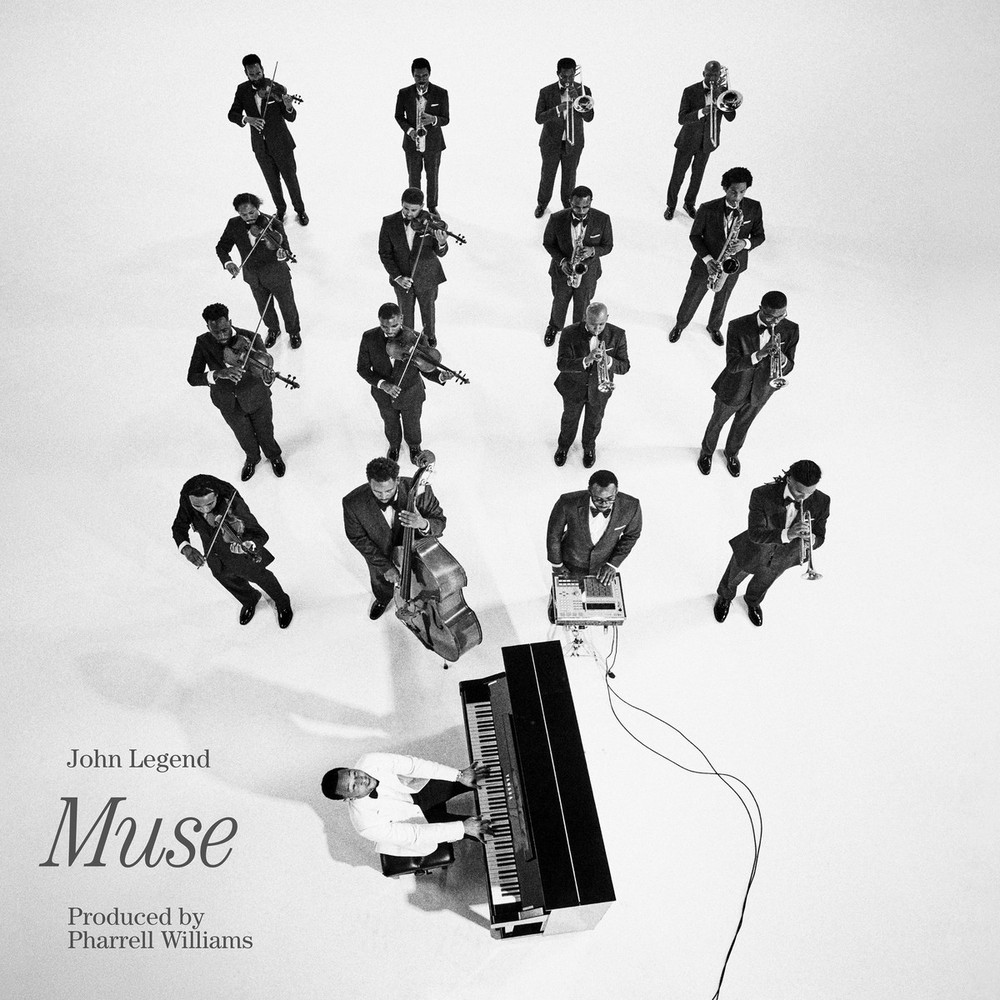
John Legend could coast forever on the piano ballad. Muse is him deciding not to.
He says as much himself. “The piano-driven ballads have gotten the most traction throughout my career,” he said when the album was announced. “I wanted to shake up the formula and do something fresh and new.” So he handed the whole thing to Pharrell Williams, who produced every track, co-wrote it and sings on six of the 16 songs. It's the first full album the two have made together in more than 20 years of friendship, and it started with a single vocal: Legend's part on Clipse's “The Birds Don't Sing” made Pharrell want to build a record around that voice.
They made it in Paris, mostly at Pharrell's studio inside Louis Vuitton's headquarters, and the brief was big. Legend says Pharrell wanted “a Black James Bond aesthetic,” with strings and horns over a modern backbeat. He also gave up more control than usual. “I recorded some songs on this album that he fully wrote, which I almost never do,” Legend said. That trust is the album's best quality and, now and then, its weak spot.
The weak spot comes first. “Muse” opens the record with Pharrell alongside him and a hook that's more fun than deep: “She is my muse, she is my muse that makes me a musician.” There are good lines in it, like “Dance like a sinner, but pray like she's devout,” but it's the lightest song here, and you can hear Pharrell's playfulness winning out over Legend's weight.
Things settle quickly. “Daylight,” the September lead single, is the breeziest love song he's put out in years, built on a simple promise: “I'll be here in the morning, still be here in the morning.” “Are You OK?” is the sharpest writing on the album, an argument where he keeps asking for honesty instead of an apology: “Can we get to the root? Can you handle the truth?”
“Fireflies” is where Muse gets serious. The label calls it a reflection on “inequality, loss and resilience,” and the song lives up to that. It keeps circling back to “where I was raised,” and the summertime fireflies in the chorus are lighting up streets the kids were taught to walk past. It's the closest the album comes to a statement, and it's one of the best things he's recorded in a long time.
“Bodies On The Floor” is the best song here. Legend wrote it with Samm Henshaw while watching the crime drama MobLand. “Part of me was writing with literal gang wars in mind, a vicious cycle of harm and retaliation,” he said. The result is a toxic love song dressed as a war story: “blood on the table,” bodies on the floor and a chorus about a fight “that I don't wanna fight no more.” Clipse fit right in, and it's already sitting in our Friday Rankings.
The back half keeps the quality up. “Next Time” is a classic Legend heartbreak song with a hopeful twist, “Baby, we gon' get it right next time,” and “Sail Off” closes things with a slow, grown love song built on “love you like it's our last time.”
Muse isn't perfect, and it isn't trying to be the safe John Legend album. It's a little uneven when Pharrell's ideas lead, but when the two of them meet in the middle, Legend sounds more awake than he has in years. Start with “Bodies On The Floor,” then play it front to back.